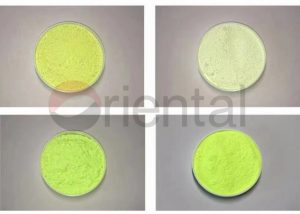
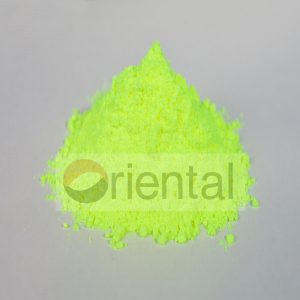
Optical brightener for PVC pipes

PVC pipes are one of many common plastics in life. The extrusion and injection are processed with appropriate amounts of stabilizers, lubricants, fillers and brighteners. The production of pipes and fittings is done through cooling, curing, forming, inspection and packaging processes. PVC pipes have been used by more and more people and are widely used in various industries. The […]

Optical brightener for PVC pipes Read More »
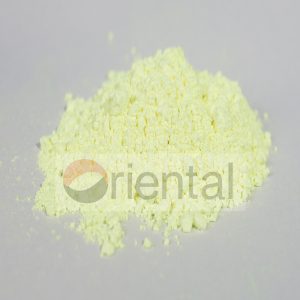
Optical brightener FP-127/ CBS-127/ OBA 378

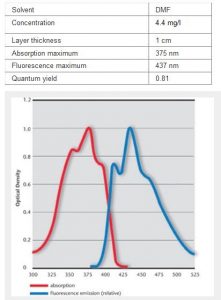
Synonyms: fluorescent whitening agent 127, FP, FP-127, CBS-127. Uvitex FP, FP-P, FP-C (Clariant). Hue/tone: blue/bluish. Physical and chemical properties: The product is light yellow crystalline powder with a melting point of 216~220°C. The maximum absorption wavelength is 368nm, and the maximum fluorescence emission wavelength is 436nm. Insoluble in water, soluble in most organic solvents such as

Optical brightener FP-127/ CBS-127/ OBA 378 Read More »

Dosage of Optical brighteners in detergent

Detergent, soap, washing powder, etc. are the most common daily necessities in our life. International brands such as Unilever, Kao, L’Oreal etc add optical brighteners to detergents to improve the washing and whitening effect of detergents.  According to incomplete statistics, about 40% of the world’s optical brightener production is used in the detergent industry. Although the amount added is very small,

Dosage of Optical brighteners in detergent Read More »

How to use optical brightener in plastics?

The whitening of plastic is to uniformly mix the optical brightener into the pre-molding material before compression molding. In order to whiten the plastic evenly, the following two points are very important. Pure quality optical brighteners are generally suggested to be added to polymers. They can be added before or during polymerization, or before high-temperature molding. When brightening light-colored plastic products,most of them are

How to use optical brightener in plastics? Read More »

plastic products

Dosage of Optical brighteners in Plastics

The amount of optical brightener is usually expressed as a percentage relative to the mass of the plastics. It is related to chemical structure, degree of dispersion, and the nature of plasticizers or other additives in plastic formulations. The dosage of Oribrite Optical brightener is generally 0.05%~0.1%. For ultra-white plastics, the dosage can reach 0.5% or more; For transparent plastics, the dosage

Dosage of Optical brighteners in Plastics Read More »

Optical brightener Oribrite OB-1 in white PVC sheet application

How to use optical brightener in plastics? Example: Optical brightener Oribrite OB-1 in white PVC sheet application Octyltin Thiol 2.8%~3.0% Epoxidized soybean oil octyl ester 1.0%~1.5% Glycerol fatty acid ester 1.2% Butyl stearate 1%~1.3% Impact modifier MBS 5%~6% Processing modifier K—120N 1.8%~2.5% Optical brightener Oribrite OB-1 0.01%~0.05% Calcium carbonate 20%~30% Recipe (mass fraction) Whitening process: PVC

Optical brightener Oribrite OB-1 in white PVC sheet application Read More »

Optical brightening agents in paints and coatings

Paint is made of mineral pigments and drying oils, resins, etc. The optical brightener used in paint must have good compatibility, insoluble in water, has high temperature resistance, has certain acid and alkali resistance, and has Good weather fastness properties etc. Solvent-based paints commonly use optical brihtener Oribrite OB.  Synonym: Uvitex OB (CIBA/BASF). Optical brighteners for water-based coatings require good water solubility, good

Optical brightening agents in paints and coatings Read More »

Optical brighteners VS fluorescent dyes

The common point is that both can emit fluorescence. The difference is that optical brightener absorbs invisible ultraviolet light and emits visible fluorescence with shorter wavelengths; while fluorescent dyes absorb visible light and emits visible fluorescence with longer wavelengths. In Common Absorb Emit Fluorescent Brightener Emit fluorescent Invisible ultraviolet light Visible fluorescence with shorter wavelengths Fluorescent Dyes Emit

Optical brighteners VS fluorescent dyes Read More »

What is optical brightener? How do optical brighteners work?

Optical brighteners, also know as fluorescent brightener, optical brightening agents(OBA), fluorescent brightening agent( FBA), Fluorescent whitening agent(FWA). Optical brighteners operate by the phenomena of fluorescence. Optical brighteners are dyes that absorb light in the UV and violet region(usually 340‐370 nm) of the EM spectrum and re-emit light in the blue region (typically 420‐470 nm). They are often used

What is optical brightener? How do optical brighteners work? Read More »

Scroll to Top