Products

OBA for Plastics

Applications: all kinds of polymers: PVC, PET, PP, PE, ABS; resin, Masterbatches, compounds, cable wire, rubber, EVA, foam board, pipes and fittings, door and window profiles, woven bags, plastic films, artificial fiber, Polyester staple fiber, nylon etc.

Oribrite OB
Oribrite OB-1
Oribrite FP-127/CBS-127
Oribrite KCB
Oribrite KSN

OBA for Detergents

Applications: homecare washing, laundry detergent, industrial detergent, soap, washing powder, softener etc.

Oribrite CBS-X
Oribrite AMS/DMS

OBA for Textile

Applications: for both exhaustion and padding process. Polyester fiber, cotton, fabrics, yarn, acrylic fiber, wool, silk, fur etc.

Oribrite SWN
Oribrite ER-I
Oribrite ER-II
Oribrite BAC
Oribrite BBU
Oribrite BA-L

OBA for Paints

Applications: for both solvent based and water based paints, coating, printing inks, wall paper, road marking paints etc.

Oribrite OBA 184

OBA for Paper

Applications: for both surface sizing and coating process and paper pulp.

Oribrite BA-L / OBA 113
Oribrite BBU / OBA 220
Oribrite BA / OBA 113

UV Absorber

Applications: UV absorbers are used as light stabilizers in plastics, rubber, coatings, and other materials to prevent them from degrading due to long-term exposure to sunlight.

UV 531

Masterbatch

Masterbatch is a concentrated pigment/additive blend for uniform plastic coloring. Our ‌Color‌, ‌White‌, and ‌Black‌ masterbatches provide vibrant hues, superior dispersion, and stability—ideal for packaging, automotive parts, films, and fibers. Offering consistent quality and cost-efficiency, they suit diverse processing needs. Explore each type for your application.

Black Masterbatch
White Masterbatch
Color Masterbatch

Effect Masterbatch

Enhance your plastic products with stunning visual effects! This specialized masterbatch series includes:
(‌1)Rhythmic Clouds: Creates natural flowing patterns;
(‌2)‌Speckle Effect Masterbatch: Adds delicate dot textures;
(‌3)‌Fibrillated Effect Masterbatch: Produces fine linear accents;
(‌4)Aluminum Glitter‌ Powder: Delivers sparkling metallic reflections.
Perfect for elevating product aesthetics across packaging, consumer goods, and decorative applications. Customizable in colors, densities and effect intensities to match your design vision.

Rhythmic Clouds
Fibrillated Effect Masterbatch
Speckle Effect Masterbatch
Aluminum Glitter Powder

FAQ

Contact us for more details.

Optical brighteners, also know as fluorescent brightener, optical brightening agents(OBA), fluorescent brightening agent(FBA), Fluorescent whitening agent(FWA).

Optical brighteners operate by the phenomena of fluorescence.

Optical brighteners are dyes that absorb light in the UV and violet region (usually 340‐370 nm) of the EM spectrum and re‐emit light in the blue region (typically 420‐470 nm). They are often used to brighten colors or mask yellowing in plastics, paints, lacquers, fibers, fabrics, detergents and paper etc, causing a “whitening” effect, making materials look less yellow by increasing the overall amount of blue light reflected.

Optical brighteners are colorless or slightly colored organic compounds that, in solution or applied to a substrate, absorb invisible ultraviolet light (300-400 nm) and re-emit visible violet-to-blue fluorescent light (400 and 500 nm).

Whiteness in substrates can be improved by (1) increasing reflection (reflectance) or (2) offsetting the blue defect. Bleaching does both of these to some extent, but invariably leaves behind part of the yellowish cast. Even the most thorough bleach cannot remove all traces of yellowing.

Bleaching agents are actually oxidizing agents or reducing agents, which use their oxidative or reductive effects to fade the colored impurities in the fibers. Clearly, this bleaching damages fibrous tissue to varying degrees. It’s a chemical process.

The whitening of the fluorescent whitening agent is an optical effect, so it will not cause damage to the fibrous tissue. It’s a physical process.

The common point is that both can emit fluorescence.

The difference is that optical brightener absorbs invisible ultraviolet light and emits visible fluorescence with shorter wavelengths; while fluorescent dyes absorb visible light and emits visible fluorescence with longer wavelengths.

The difference among these brighteners are appearances, melting point, color shade etc.

Optical Brightener- For Plastics/Polymers
OB, OB-1, FP-127, CBS-127, KCB, KSN, SWN etc.

Optical Brightener- For Detergent/Soap Application
CBS-X, OBA 351, DMS-X, AMS etc.

Optical Brightener- For Textile
ER-I (FBA199), ER-II (FBA199:1), EBF, BAC, SWN, CL, PF, BA, BBU, CXT etc.

Optical Brightener- For Paints, coating & inks
OB equivalent to BASF Tinopal OB

Optical Brightener- For Paper, pulp
Di sulfonated OBA, Tetra sulfonated OBA, Hexa sulfonated OBA
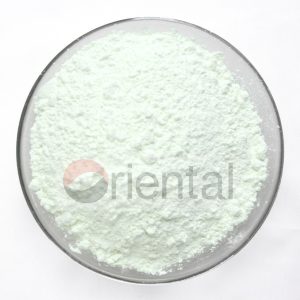
The whitening of plastic is to uniformly mix the optical brightener into the pre-molding material before compression molding.

In order to whiten the plastic evenly, the following two points is very important.

  1. Evenly mix the optical brightener in the plastic substrate, that is, it needs to be added before the plastic is formed;
  2. Disperse the optical brightener evenly in the plastic and evenly distribute it in the melt.

Pure quality optical brighteners are generally suggested to be added to polymers. They can be added before or during polymerization, or before high-temperature molding.

Scroll to Top