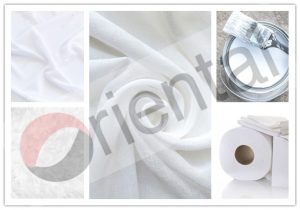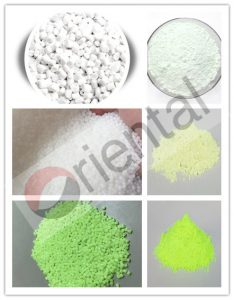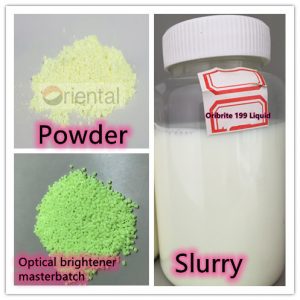
Product Applications

papermill

Application methods of optical brighteners for papermaking

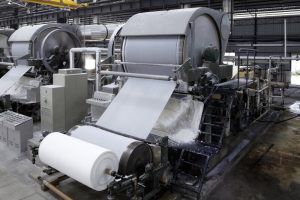
There are three application methods: Pulp whitening: (The dosage is generally about 0.05%~0.2% of the dry pulp weight, pH value 7~8) Disulfonic acid varieties are suitable for neutral or alkaline papermaking, such as C.I., 85, 113, 134, etc.; Acidic papermaking requires Optical brighteners to be stable to acid and aluminum sulfate, and tetrasulfonic acid varieties […]

Application methods of optical brighteners for papermaking Read More »
What optical brightener should be used for EVA foam shoe soles?

Foam EVA and foam PVC are widely used in the soles of sports shoes and casual shoes because of their relatively light elasticity, good performance and strong flexibility. Most of the foam soles are white. What kind of optical brightener should be used for EVA foam shoe soles? The soles often come into contact with soil, water, land and other

What optical brightener should be used for EVA foam shoe soles? Read More »

Optical brightener example and their uses

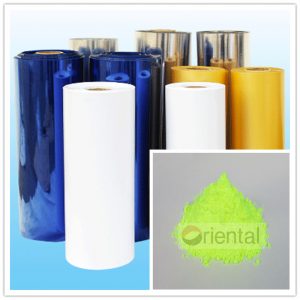
Optical Brightener- For Plastics/ Polymers OB, OB-1, FP-127, CBS-127, KCB, KSN, SWN etc. The difference among these brighteners are appearances, melting point, color shade etc. Contact us for more details. Optical Brightener- For Detergent/Soap Application CBS-X, OBA 351, DMS-X, AMS etc. Optical Brightener- For Textile ER-I (FBA199), ER-II (FBA199:1), EBF, BAC, SWN,CL, PF, BA, BBU,

Optical brightener example and their uses Read More »

Optical brightener for masterbatches and polymer compounds

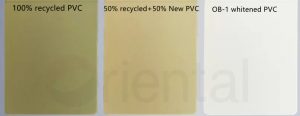
Compounding is an important part of plastic waste recycling. The commonly used recycled materials include woven bags, beverage bottles, films, foams etc. Due to the different levels of impurities contained in the returned material, the granules produced are yellow and not white, which is a problem for the compound factories. Here are some useful points for choosing the right whitening agent. To choose

Optical brightener for masterbatches and polymer compounds Read More »

Optical brightener for PVC pipes

PVC pipes are one of many common plastics in life. The extrusion and injection are processed with appropriate amounts of stabilizers, lubricants, fillers and brighteners. The production of pipes and fittings is done through cooling, curing, forming, inspection and packaging processes. PVC pipes have been used by more and more people and are widely used in various industries. The

Optical brightener for PVC pipes Read More »

Dosage of Optical brighteners in detergent

Detergent, soap, washing powder, etc. are the most common daily necessities in our life. International brands such as Unilever, Kao, L’Oreal etc add optical brighteners to detergents to improve the washing and whitening effect of detergents.  According to incomplete statistics, about 40% of the world’s optical brightener production is used in the detergent industry. Although the amount added is very small,

Dosage of Optical brighteners in detergent Read More »

How to use optical brightener in plastics?

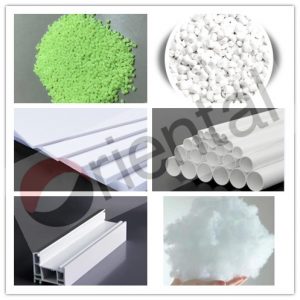
The whitening of plastic is to uniformly mix the optical brightener into the pre-molding material before compression molding. In order to whiten the plastic evenly, the following two points are very important. Pure quality optical brighteners are generally suggested to be added to polymers. They can be added before or during polymerization, or before high-temperature molding. When brightening light-colored plastic products,most of them are

How to use optical brightener in plastics? Read More »

plastic products

Dosage of Optical brighteners in Plastics

The amount of optical brightener is usually expressed as a percentage relative to the mass of the plastics. It is related to chemical structure, degree of dispersion, and the nature of plasticizers or other additives in plastic formulations. The dosage of Oribrite Optical brightener is generally 0.05%~0.1%. For ultra-white plastics, the dosage can reach 0.5% or more; For transparent plastics, the dosage

Dosage of Optical brighteners in Plastics Read More »

Optical brightener Oribrite OB-1 in white PVC sheet application

How to use optical brightener in plastics? Example: Optical brightener Oribrite OB-1 in white PVC sheet application Octyltin Thiol 2.8%~3.0% Epoxidized soybean oil octyl ester 1.0%~1.5% Glycerol fatty acid ester 1.2% Butyl stearate 1%~1.3% Impact modifier MBS 5%~6% Processing modifier K—120N 1.8%~2.5% Optical brightener Oribrite OB-1 0.01%~0.05% Calcium carbonate 20%~30% Recipe (mass fraction) Whitening process: PVC

Optical brightener Oribrite OB-1 in white PVC sheet application Read More »

Scroll to Top